
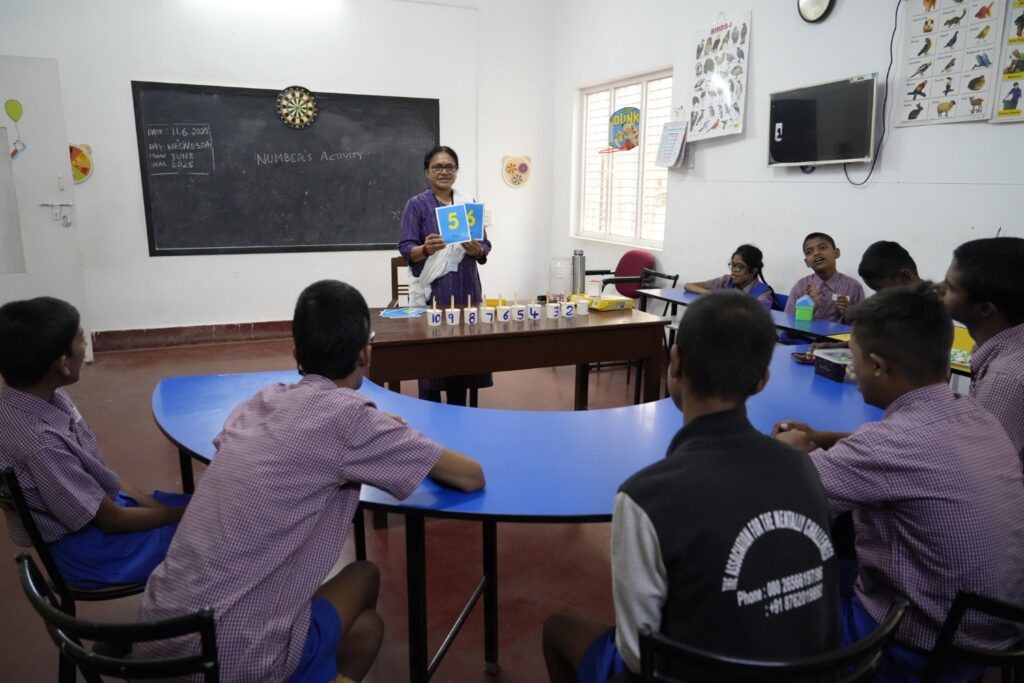
What Brings Me Back Every Day
For the past ten years, I have worked with individuals with Intellectual and Developmental Disabilities (IDD) and their families. Over the years, people have often asked me, “What keeps you motivated?” or “How do you do this work every day?”
The work is demanding, emotional, and at times heartbreaking. Yet every morning, I wake up wanting to return.
My answer is simple: it is not the programmes, therapies, reports, or milestones that bring me back. It is the people. It is the love.
Working in the disability sector is not merely a profession; it is a journey of learning, humility, and human connection. Every day, I witness courage in its purest form—not the courage celebrated in headlines, but the quiet courage of a young adult learning a new skill after months of practice, a parent refusing to give up despite overwhelming challenges, or a beneficiary taking a small but significant step towards independence.
A smile from a child who once struggled to make eye contact can make an entire day meaningful.
Understanding the Value of Care
When we talk about care for individuals with IDD, we often focus on services, therapies, education, or employment. While these are important, care is much more than that.
Care means recognizing the inherent dignity and worth of every human being.
Care means believing that every individual, regardless of their abilities, deserves opportunities to learn, grow, contribute, and be included.
Care means creating a world where a person’s value is not measured by productivity, academic achievement, or social status, but by their humanity.
For individuals with IDD, the barriers they face are often not created by their disabilities but by society’s lack of understanding, acceptance, and inclusion. When we provide care, we are not simply supporting a person with a disability; we are helping remove barriers that prevent them from living meaningful and fulfilling lives.
Lessons from the Individuals We Serve
One of the greatest privileges of working in this field is the opportunity to learn from the individuals themselves.
The people I work with have taught me patience in a world that demands speed. They have taught me honesty in a world that often hides behind appearances. They have shown me that joy can be found in the simplest moments.
Many of our beneficiaries approach life with a level of authenticity that is rare. They celebrate small victories with immense happiness. They forgive easily. They live fully in the present moment.
They remind us that happiness is often found in simple things—a completed task, a shared meal, a favourite song, a walk in the garden, or a smile from a friend.
In a world that constantly pushes us to achieve more, they teach us the value of simply being.
The Journey of Families
Behind every individual with IDD is a family navigating a unique and often challenging journey.
Many parents arrive feeling overwhelmed, uncertain about the future, and burdened by societal judgment. Over time, I have seen these same families transform into confident advocates for their children. I have witnessed mothers discover their own strength, fathers become champions of inclusion, and siblings develop remarkable empathy and resilience.
There are moments that stay with me forever:
- A mother shedding tears of joy because her son travelled independently for the first time.
- A father proudly showing relatives the products his daughter created at the vocational training centre.
- A parent saying, “For the first time, I feel that someone truly understands my child.”
These are not stories of charity. They are stories of human connection.
When a family feels empowered, the impact extends far beyond one individual—it strengthens an entire community.
These experiences remind me that every person, regardless of ability, wants the same things: to be seen, to be valued, to belong, and to be loved.
Why Inclusion Matters?
Inclusion is often discussed as a policy objective or social responsibility. However, inclusion benefits everyone.
Caring for individuals with IDD is not about sympathy. It is about recognizing humanity. It is about understanding that every person deserves dignity, opportunity, respect, and love.
It is about creating a society where people are valued not for what they can produce, but for who they are.
When individuals with IDD are included in schools, workplaces, recreational spaces, and communities, society becomes more compassionate, patient, and understanding. Inclusion challenges our assumptions about ability and success. It teaches us that diversity is not something to be accommodated; it is something to be celebrated.
The true measure of a society is how it treats its most vulnerable members. By creating opportunities for individuals with IDD, we create a more humane, equitable, and caring world for all.
What Keeps Me Coming Back?
After ten years, I still look forward to returning every day.
Not because every day is easy.
Not because every challenge has a solution.
There are setbacks, funding constraints, and moments when progress feels slow. Yet every day offers an opportunity to witness resilience, courage, affection, and hope.
There are days when:
- A non-verbal child communicates a need for the first time.
- A young adult independently boards a bus and travels to work.
- A caregiver gains confidence through skill training.
- A beneficiary receives a stipend and proudly contributes to the household.
- A parent says, “For the first time, I feel hopeful about my child’s future.”
These moments cannot be measured in numbers alone.
They remind me that meaningful change happens one person, one family, and one opportunity at a time.
What keeps me coming back every day is not the work itself—it is the privilege of witnessing human potential unfold in ways that many people never get to see.
The individuals we serve may require support in certain areas of life, but they enrich our lives with lessons in resilience, perseverance, kindness, and unconditional acceptance.
The individuals and families I work with have given me far more than I could ever give them. They have taught me empathy, patience, gratitude, and the importance of celebrating every step forward.
Perhaps that is the greatest lesson of all: every life has value, every person deserves a sense of belonging, and every act of care has the power to change a life.
That is why I continue to return each day—with gratitude, purpose, and hope.
And that is why this work will always matter.
Priyadarshini Mukherjee.
Principal Coordinator-
IDD Education & Programmes.